
You know what they say… once you go dubstep, you never go back.
For us bassheads, it all starts the same way. Dubstep wasn’t the first kind of music we fell in love with. We listened to hip-hop, rock, pop, metal, or maybe a mix of everything. Wherever your journey into music began, it definitely didn’t start with a bass drop.
In fact, most of us rejected it at first. Dubstep, EDM, none of it felt like “real music.” You may have thought to yourself, “Music made on a laptop, barely any vocals, no traditional instruments?” “Why would we listen to that?” “It just sounds like robots fighting.”
Then one day, your homie throws on Bangarang by Skrillex. At first, it’s too crazy, maybe even scary. Then, suddenly, you start to feel the bass move within you. You’re still not fully sold, but something about it resonates with you.
Now comes the turning point. That same homie brings you to your first rave or music festival, and you get your face absolutely melted by a filthy drop, and have an epiphany right in the middle of the dance floor.
It’s not just the sound. It’s the full experience. The lasers, the production, the energy of the crowd, it all hits at once, and suddenly you’re transported into another world.
You come home, and it’s all you think about, and you start digging. More artists, more shows, more festivals. Different styles, older tracks, newer sounds. You start traveling for it, planning around it, getting pulled deeper into the culture.
You realize dubstep isn’t just a bunch of computer sounds. It’s an experience. It’s a new form of music altogether, and you either get it or you don’t.
So, whether you’re just dipping your toes into dubstep or you’re trying to understand more about bass music culture, this article is for you.
In this guide, we’re breaking down what dubstep actually is, where it came from, and where it’s headed next.

What Is Dubstep?
At its core, dubstep is built around 140 BPM, half-time drums, and bass that drives the entire track.
That’s the technical answer. But that alone doesn’t really explain it.
Dubstep isn’t just about how it’s produced; it’s about how it hits. The structure is built around tension and release. Long builds, sudden drops, space between elements, everything is intentional.
Unlike a lot of other electronic music, it doesn’t rely on constant movement. It slows things down, lets the track breathe, and then hits you when it matters.
That’s why it translates so well live. The way a track is built is meant to land in a crowd.
The Origins of Dubstep
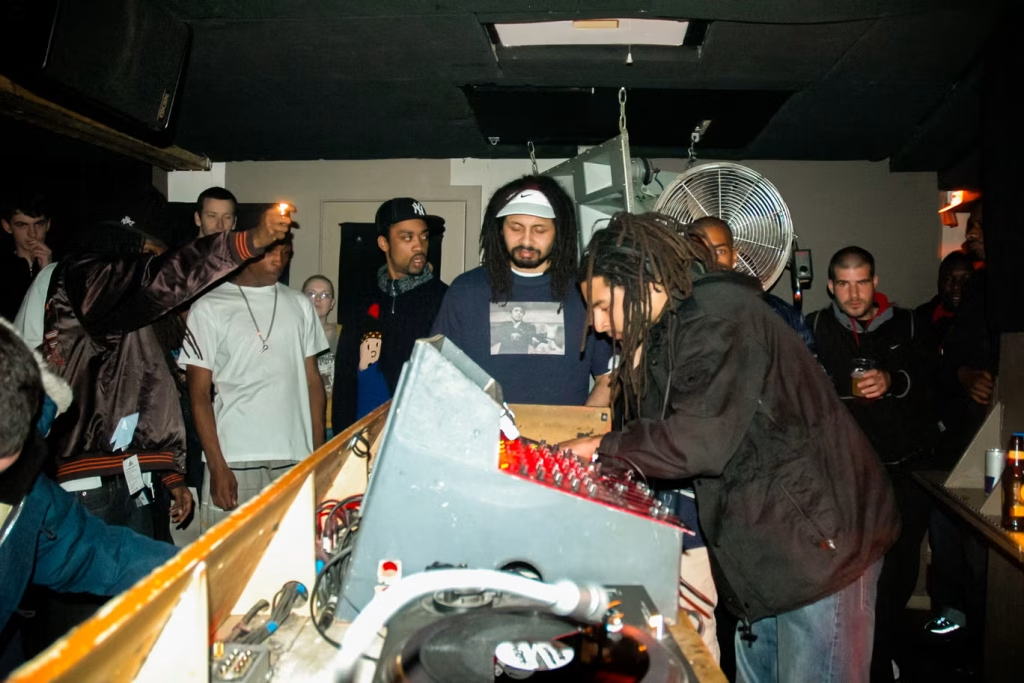
Dubstep came out of South London in the early 2000s. It didn’t come out of nowhere either; it was built off UK garage, dub reggae, grime, and jungle.
Producers started stripping things back. Less vocals, less bounce, more focus on rhythm and low-end. The energy shifted from fast and melodic to slow, heavy, and space-driven.
Early names like Skream, Benga, and Digital Mystikz helped shape that sound. It wasn’t about making hits, it was about building something new.
A lot of this developed through nights like FWD>> at Plastic People in London. Producers would test unreleased tracks, see how people reacted, and adjust from there.
Pirate radio also played a role. Sets were being broadcast across the city, helping the sound spread without needing industry backing.
At that point, dubstep wasn’t meant for big stages. It was built for sound systems, smaller rooms, and people who were locked into the music.
How Dubstep Evolved
When dubstep made its way to the US in the late 2000s, things started to shift.
The sound got more aggressive. Producers leaned into sharper, more in-your-face sound design. The drops became bigger, louder, and more direct. This is what most people now associate with dubstep.
Skrillex played a big role in that shift. Records like Scary Monsters and Nice Sprites, along with I Can’t Stop by Flux Pavilion, opened the door for a much wider audience and pushed dubstep into the mainstream.
Bass Music Genres
As the EDM craze swept through North America, dubstep exploded, branching out into various sub-genres of bass music.
Brostep
High-energy dubstep centered on sharp sound design, heavy drops, and festival-scale impact.
Riddim
Minimal, loop-driven dubstep focused on steady patterns, groove, and subtle variation.
Deep dubstep / 140
Sub-heavy, spacious bass music rooted in UK dubstep, emphasizing rhythm and atmosphere.
Freeform Bass
Experimental bass music with unconventional structure, spacey, trippy atmospheres, and a focus on intricate sound design.
Experimental bass
Unconventional bass music focused on abstract sound design, complex rhythms, and psychedelic, forward-thinking production.
Wook bass
Wonky, psychedelic bass music rooted in festival culture, defined by loose grooves, warped sound design, and heavy low-end movement.
Melodic dubstep
Emotion-driven dubstep blends powerful basslines with uplifting melodies, rich harmonies, and vocal-led song structures.
Now, all of these exist at the same time. You’ll hear different styles in the same set, sometimes even in the same track.
Dubstep didn’t move in one direction; it expanded.
What Defines Dubstep Music
There are a few core elements that stay consistent, even as the sound changes.
140 BPM / Half-Time Feel
Even though the tempo sits around 140, the drums are spaced in a way that makes it feel slower and heavier.
The Drop
This is where everything comes together. The build creates tension, and the drop releases it. That contrast is what gives dubstep its impact.
Bass-Driven Sound Design
The bass isn’t sitting underneath the track, it is the track. Everything else supports it.
Space
Not everything is filled. Silence and gaps are part of the structure, and they make the heavy moments hit harder.
Switch-Ups
A lot of tracks don’t just repeat the same drop. They evolve, change patterns, or flip the energy halfway through.
It’s simple on the surface, but there’s a lot going on underneath.
Popular Dubstep Artists
Dubstep has never been defined by one sound or one era. Each wave of artists has reshaped the genre in its own way, from underground innovators to festival headliners.
Foundational Artists
- Benga
- Digital Mystikz
- Skream
- Mala
- Rusko
- Caspa

These artists built the blueprint. Their influence is still present today, especially in deeper and more minimal styles.
Mainstream Breakthrough Artists

- Skrillex
- Flux Pavilion
- Zeds Dead
- Excision
While still on top of the scene today, this group helped bring dubstep to a global audience, bridging underground roots with large-scale exposure.
Modern Bass Scene

- GRiZ
- Subtronics
- Ganja White Night
- Peekaboo
- Liquid Stranger
- Of The Trees
- Mersiv
These are some of the names shaping what dubstep looks and sounds like today, especially in a live setting.
And it keeps evolving. New artists are constantly pushing the sound forward, whether that’s heavier, more minimal, or more experimental.
Popular Dubstep Labels

Labels have played a major role in defining each era of dubstep, from underground movements to modern bass expansion.
Foundational & Underground Labels
- DMZ
- Tempa
- Deep Medi Musik
These labels established the original UK sound, centered around minimalism, sub-bass, and sound system culture.
Mainstream & Expansion Era Labels
- Circus Records
- Never Say Die Records
- OWSLA
This wave helped push dubstep globally, leaning into heavier, more aggressive sounds and larger audiences.
Modern Bass & Experimental Labels
- Wakaan
- Deadbeats
- SubCarbon Records
- Subsidia
- Cyclops Recordings
- Monstercat
These labels reflect the current direction of bass music, blending dubstep with experimental, melodic, and cross-genre influences.
Dubstep Festivals and Live Experience

Dubstep is built for live environments. The way tracks are structured, with tension and release, translates directly to crowd energy.
For many fans, this is where dubstep fully clicks, the scale, the sound, and the crowd all working together.
In the US, dubstep plays a central role in major EDM festivals. Events like Lost Lands have become dedicated spaces for bass music, drawing fans who are deeply connected to the genre.
Artists like Excision have helped shape this experience through large-scale production, curated lineups, and immersive visuals that match the intensity of the music.
Venues also play a role. Red Rocks Amphitheatre stands out as one of the most recognizable settings for dubstep shows, where the natural acoustics and environment add another layer to the experience.
Bass Music Culture
- Fans travel across the country for shows and festivals
- Communities form around events and artists
- Visual production is a core part of performances
- Sets often include unreleased or exclusive tracks

Dubstep crowds are engaged and aware. Shows feel participatory rather than passive, built around shared energy and connection.
If you are looking to explore the live side of the genre, check out our coverage of EDM festivals in the US and Red Rocks EDM events.
Why Dubstep Is Still Growing
Dubstep has outlasted multiple waves within electronic music. While other genres cycle in and out, dubstep continues to adapt.
One reason is flexibility. The genre blends easily with others, allowing artists to experiment without losing its core identity.
Another factor is community. Dubstep fans are deeply invested, supporting artists, attending events, and staying connected to the culture.
Technology has also played a role. Advances in production tools allow for more detailed sound design, giving artists new ways to push boundaries.
At the same time, there has been a renewed focus on the genre’s roots. Deep dubstep and UK-inspired sounds are seeing increased attention, creating a balance between where the genre started and where it is going.
Dubstep is no longer a passing phase within EDM. It has cemented itself as a core part of bass music culture, with a global audience, a dedicated community, and a sound that continues to evolve without losing its identity.
Dubstep FAQs
What is dubstep in simple terms?
Dubstep is a style of electronic music built around heavy bass, half-time rhythms, and dramatic drops. Most tracks are produced around 140 BPM, but feel slower due to their drum patterns. It focuses more on sound design and bass than melody, making it a core genre within bass music.
When was dubstep created?
Dubstep emerged in the early 2000s in South London. It developed from UK garage, dub, grime, and jungle, with early pioneers shaping its minimal, bass-heavy sound in underground clubs and on pirate radio.
What BPM is dubstep?
Dubstep is typically produced at 140 BPM. However, because of its half-time drum structure, it often feels closer to 70 BPM in terms of rhythm and pacing.
What is the difference between dubstep and EDM?
Dubstep is a genre within EDM, not a separate category. While EDM includes styles like house, techno, and trance, dubstep stands out for its heavy bass, half-time rhythms, and focus on drops rather than steady dance beats.
Who are the most popular dubstep artists?
Some of the most recognized dubstep artists include Skrillex, Excision, Subtronics, Zeds Dead, Flux Pavilion, Ganja White Night, and Liquid Stranger. These artists represent different eras and styles within dubstep, from early mainstream breakthroughs to modern festival-driven sounds.
Where can I experience dubstep live?
Dubstep is best experienced live at festivals and venues with strong sound systems. Major events like Lost Lands and iconic venues like Red Rocks Amphitheatre regularly host dubstep artists and bass music lineups. You can also explore EDM festivals in the US and Red Rocks EDM events to find upcoming shows.
Explore Dubstep Further
If you’re looking to dive deeper into the scene, explore our full breakdowns of top dubstep artists, upcoming EDM festivals in the US, and the latest Red Rocks EDM events.